
Northern Kenya's dramatic riverine wilderness
Covering 165 square kilometres in Samburu County between 800 and 1,230 metres above sea level, Samburu National Reserve delivers a striking ecological contrast to southern Kenya's open savannahs. Rugged ochre hills, volcanic outcrops and dry acacia-commiphora scrub surround the lifeline of the north—the Ewaso Ng'iro (Ewaso Nyiro) River. Shaded by doum palms, riverine fig trees and acacia woodlands, the river corridor draws wildlife from across the arid plains, creating intimate, uncrowded game viewing backed by views toward Mount Ololokwe and the Koitogor hills.
The Samburu Special Five, elephants and big cats
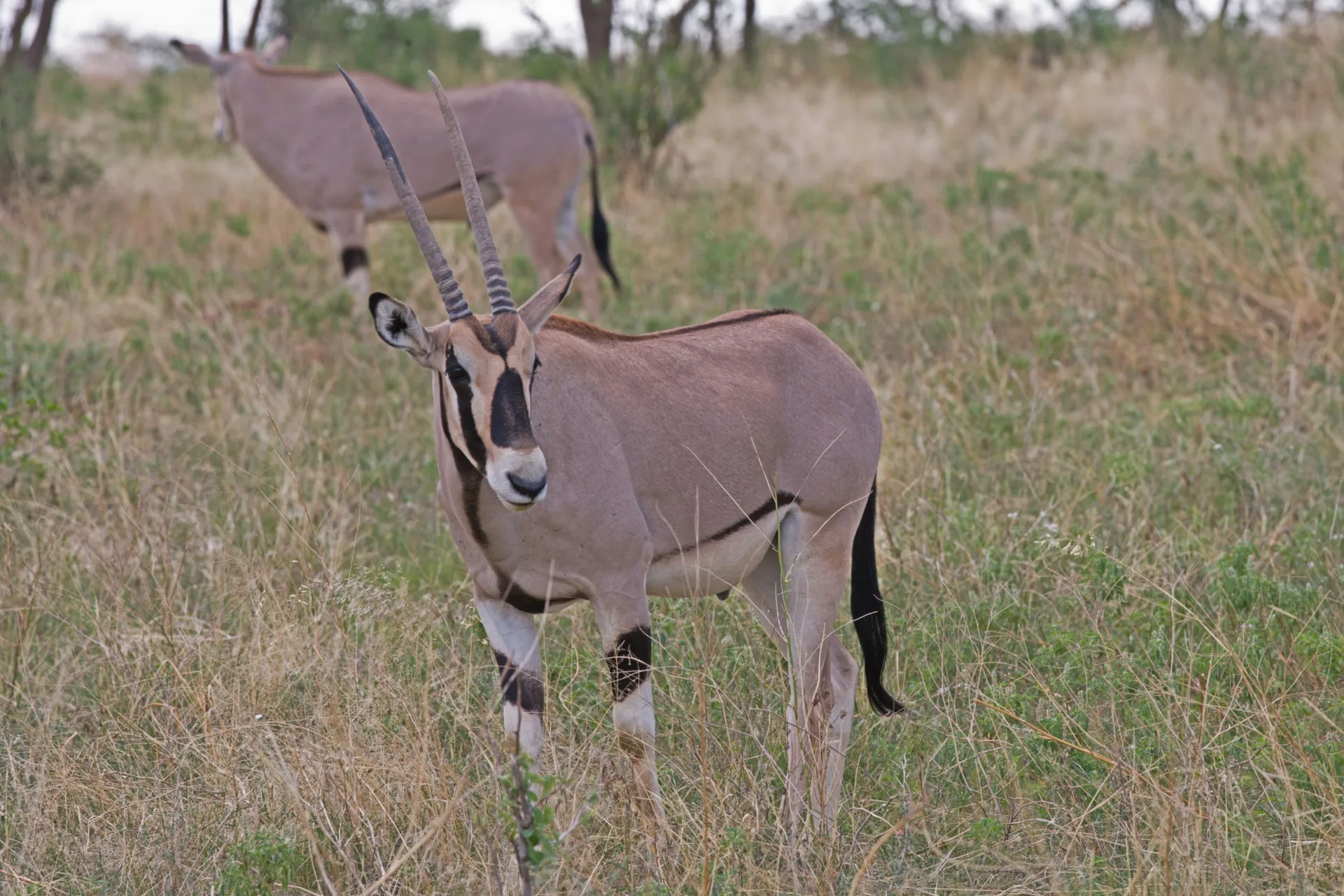
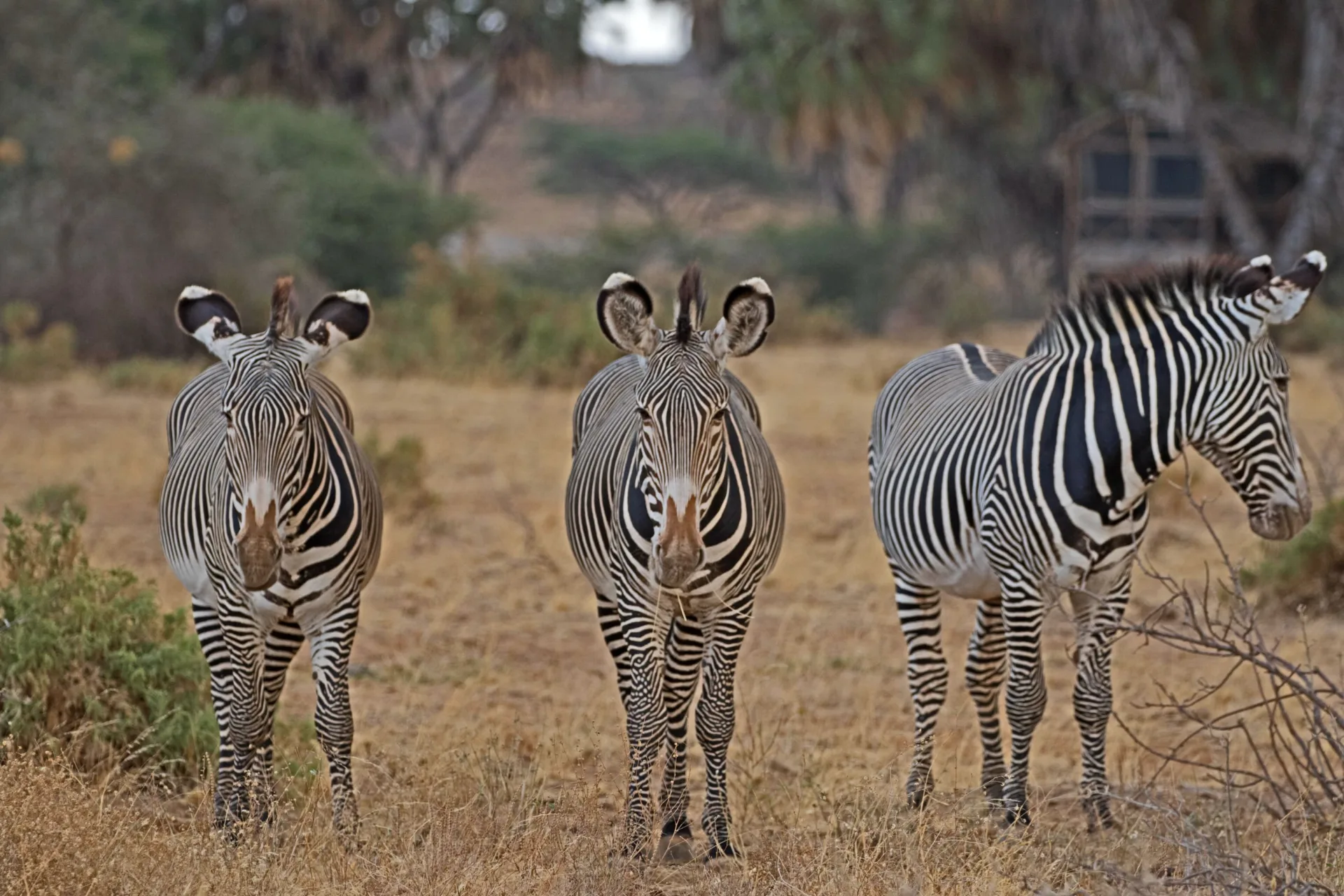
Samburu is the premier destination in East Africa for the Samburu Special Five—five arid-adapted species rarely or never seen in the Masai Mara or Amboseli: the endangered Grevy's zebra, reticulated giraffe, Beisa oryx, long-necked gerenuk (which stands on its hind legs to browse high thorn branches) and Somali ostrich. Because these species evolved for dry northern habitats, even a two-night stay reveals wildlife found nowhere on Kenya's southern circuit.
Beyond its northern specialists, Samburu is celebrated for its large elephant families and strong predator sightings. The reserve hosts the flagship Samburu Research Centre of Save the Elephants, established in 1997 to study over 900 individual resident and migrant elephants. Along the shaded riverbanks, Samburu is also one of Kenya's most dependable reserves for spotting leopards, alongside lions, cheetahs, Nile crocodiles and—with luck—African wild dogs. Rhinos are not resident inside Samburu itself. Conservation groups including Ewaso Lions and the Grevy's Zebra Trust work directly with local pastoralist communities to protect carnivores and endangered grazers across the wider ecosystem. Birders can look for over 390 species recorded across the Samburu–Buffalo Springs basin, including vulturine guineafowl, golden-breasted starling, Somali bee-eater and martial eagle.
Reserve governance, separate tickets and bordering conservancies
A crucial planning detail separates Samburu from Kenya's national parks: Samburu National Reserve is owned and administered by the County Government of Samburu rather than Kenya Wildlife Service (KWS). Directly across the Ewaso Nyiro bridge sits Buffalo Springs National Reserve (administered by Isiolo County), with Shaba National Reserve further east. Entry tickets are reserve-specific—crossing the river into Buffalo Springs requires a separate reserve ticket, and standard park rules apply (40 km/h speed limit, no off-road driving and minimum 20-metre wildlife viewing distance).
Bordering community conservancies—including Westgate Conservancy (home to secluded luxury lodges), Kalama Conservancy and Namunyak Wildlife Conservancy (home to the community-run Reteti Elephant Sanctuary)—charge separate conservancy fees and permit activities not allowed inside the national reserve, such as guided bush walks, camel safaris and night drives. Respectful, pre-arranged cultural visits with Samburu hosts add meaningful local perspective when planned through approved community partnerships.
Planning the right northern Kenya safari circuit
Because Samburu sits roughly 350 km north of Nairobi and daytime temperatures are warm, allow at least two to three nights for unhurried early-morning and late-afternoon game drives with a midday rest beside the river. Road safaris pair Samburu naturally with Ol Pejeta Conservancy, Mount Kenya National Park and Lewa Wildlife Conservancy—adding black and white rhinos to complete a Big Five circuit. Travellers short on time can connect Samburu directly with Masai Mara National Reserve or Amboseli National Park via scheduled light aircraft on our Kenya fly-in safaris, Kenya safari packages or a private tailor-made itinerary.
What makes this destination special
- Samburu Special Five: search for Grevy's zebra, reticulated giraffe, Beisa oryx, gerenuk and Somali ostrich in one compact northern reserve.
- Ewaso Nyiro elephants: watch large, well-studied elephant herds gather along shaded riverbanks and doum palm groves.
- Prime leopard & predator country: riverine acacia trees provide exceptional leopard habitat alongside lions, cheetahs and spotted hyenas.
- Striking semi-arid scenery: dramatic volcanic hills, red earth, doum palms and sweeping views toward Mount Ololokwe.
- Dryland birding stronghold: over 390 recorded species across Samburu–Buffalo Springs, including vulturine guineafowl and golden-breasted starling.
- Conservancies & Samburu heritage: pair reserve drives with Westgate or Kalama conservancies, Reteti Elephant Sanctuary or host-led cultural visits.
Best time to visit
Dry seasons (June–October and December–March) draw elephants, leopards and the Special Five to the Ewaso Nyiro River. Green months (April–May, November) bring lush bush, migratory birds and quieter tracks; plan around warm midday heat.
How to get there
By road from Nairobi: Approximately 340–350 km north of Nairobi via the A2 highway through Nanyuki, Isiolo and Archer's Post (typically 6 to 7 hours in a 4x4 safari vehicle, depending on traffic and stops). Most private overland itineraries break the drive with a night or two at Ol Pejeta Conservancy or Mount Kenya. Main entry points include Archer's Gate (main access off the Marsabit highway), West Gate (from Westgate Conservancy), Kalama Gate (northern border) and Uaso Bridge Gate (crossing from Buffalo Springs National Reserve).
By air: Daily scheduled light-aircraft flights depart Nairobi's Wilson Airport (approx. 60–75 minutes; 15 kg soft-sided baggage limit typically applies) to Samburu Oryx, Buffalo Springs and Kalama airstrips, with onward connections to the Masai Mara, Laikipia and Nanyuki.
Official reserve administration: Samburu National Reserve is managed by the County Government of Samburu (separate from KWS national parks and Isiolo County's Buffalo Springs). Eventide Safaris confirms current official county fees, entry gates and payment procedures in your written quotation.
Why visit Samburu National Reserve?
Choose Samburu National Reserve for northern Kenya's rare Special Five wildlife, intimate riverside leopard and elephant viewing, dramatic arid scenery far removed from crowded southern parks, and direct connections to Laikipia's premier rhino conservancies.
Where is Samburu National Reserve?
Explore this destination's location in Kenya and the surrounding area.
Where to stay around Samburu National Reserve
Consider different comfort levels and locations when planning this part of Kenya. Every stay is subject to availability and a confirmed quotation.
Compare more accommodation for Samburu National ReserveSafari itineraries that include Samburu National Reserve
Explore routes that feature this destination, then choose the pace and accommodation that work for your group.
6 Day Samburu and Ol Pejeta Private Conservation Safari
Spend six days on a private 4x4 safari from Nairobi, with three nights by Samburu’s Ewaso Nyiro River and two nights at...
7 Day Samburu, Ol Pejeta and Masai Mara Private Safari
Cross three of Kenya’s contrasting wildlife landscapes in seven days: two nights in Samburu, two at Ol Pejeta and two in the...